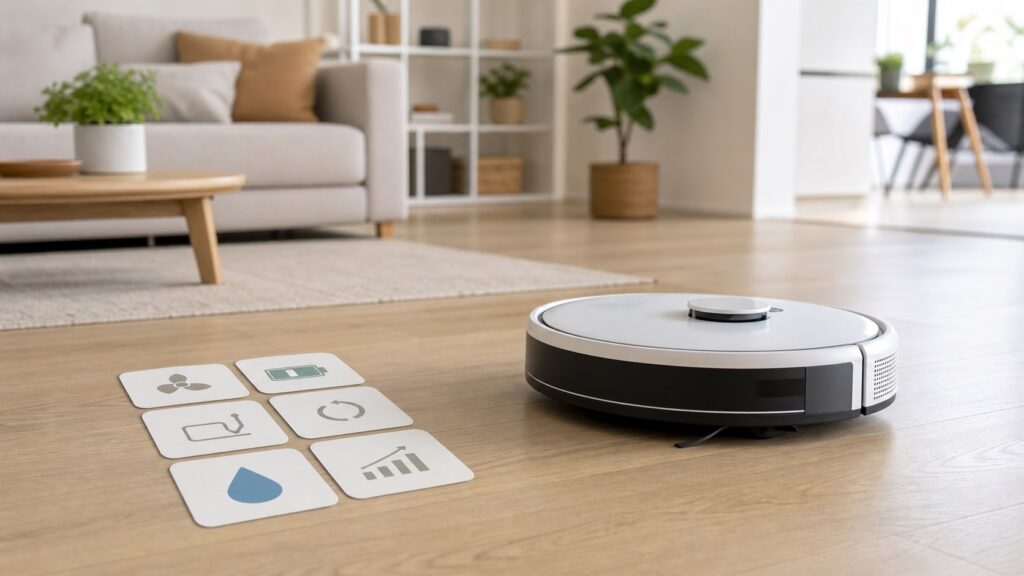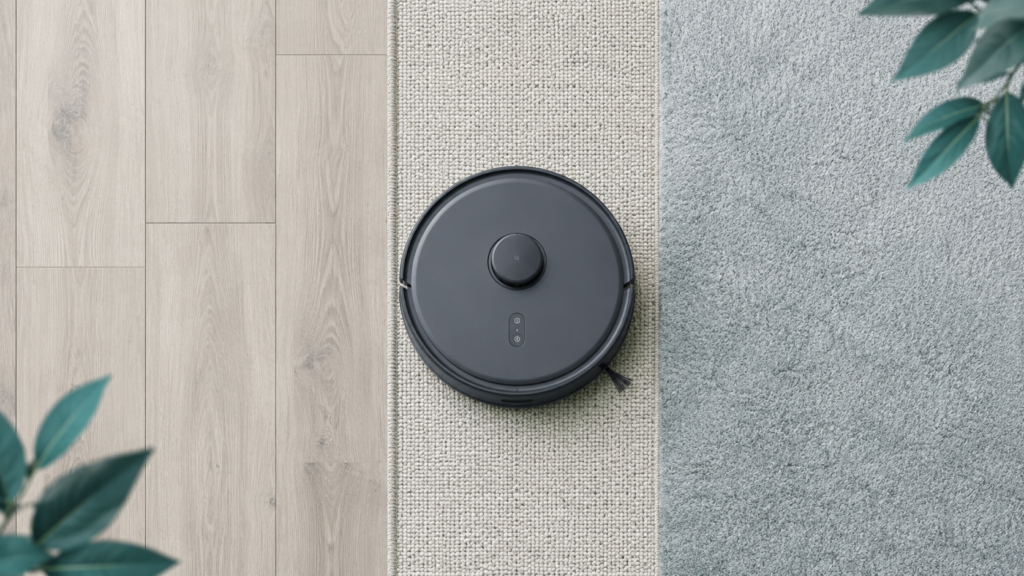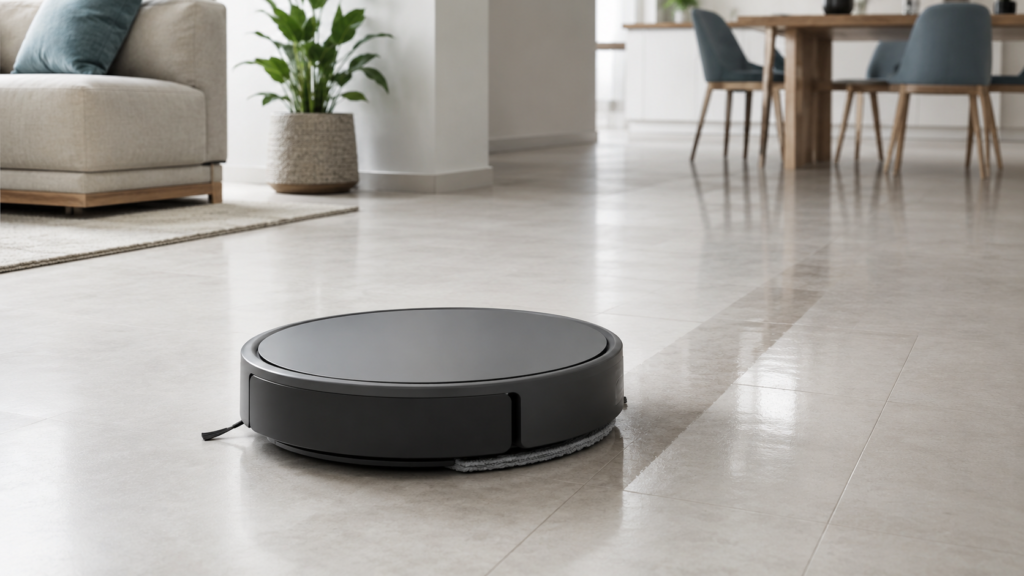
A robot vacuum with mopping can sound like the perfect upgrade — one machine that vacuums and wipes your floors without extra effort. But the feature is not equally useful in every home, and it usually comes with more setup and upkeep than a vacuum-only model. Before adding mopping to your shopping list, it helps to understand what the feature actually involves, which homes benefit most, and what kind of maintenance you’re signing up for.
This guide walks through the practical side of that decision: floor types, carpets and rugs, water tanks and mop pads, dock differences, and the questions worth asking before you buy. It does not rank or recommend specific products — the goal is simply to help you decide whether mopping is worth considering for your own home.
Table of Contents
- Quick Answer
- Who This Guide Is For
- What Mopping Means in a Buying Decision
- When a Mopping Feature May Be Useful
- Floor Types: Where Mopping Matters Most
- Carpets and Rugs: What to Check Before Buying
- Maintenance: Water Tanks, Mop Pads, and Cleaning Tasks
- Dock Features: Charging, Auto-Empty, and Mop-Washing Differences
- What Mopping Does Not Replace
- Questions to Ask Before Choosing a Robot Vacuum With Mopping
- Common Buying Mistakes to Avoid
- FAQ
- Final Takeaway
Quick Answer
A robot vacuum with mopping can be a useful addition for homes with mostly hard flooring and an owner willing to handle some extra maintenance — filling and emptying water tanks, cleaning or replacing mop pads, and occasionally checking dock components. It’s generally less useful in carpet-heavy homes, since most mopping systems are designed to avoid or limit contact with carpets and rugs. Mopping is also best understood as light, frequent surface cleaning rather than a replacement for deep manual mopping. The right choice depends on your floor types, your tolerance for upkeep, and what a specific model’s manufacturer instructions actually say — not on any single feature being universally "better."
Who This Guide Is For
This guide is for readers who already understand the basics of robot vacuums and are now trying to decide whether the mopping feature specifically is worth choosing. If you’re earlier in your research and want a broader overview of what to consider when buying a robot vacuum in general, SmartCleanLab’s robot vacuum buying guide for beginners is a good starting point. This article assumes you’ve already settled on the basics and are weighing one specific decision: vacuum-only, or vacuum and mop.
What Mopping Means in a Buying Decision
Adding mopping to a robot vacuum isn’t just a checkbox — it changes what the machine needs from you and what it can realistically do. Mopping systems vary by model, and features such as water tanks, mop pads, pad movement, or mop lifting can change how the robot is used day to day. Some mop-equipped robots simply drag a damp pad across the floor, while others use more involved systems for water delivery, pad cleaning, or carpet avoidance.
This article does not go deep into how those mechanisms work internally — for a closer look at what mop features actually do and how they function, see SmartCleanLab’s separate guide on robot vacuum mop features. Here, the focus stays on the buying decision itself: whether mopping fits your home, and what it asks of you as the owner.
When a Mopping Feature May Be Useful
A mopping feature tends to make the most sense for households that already lean toward light, frequent floor care rather than occasional deep cleaning sessions. If most of your home has hard flooring and you don’t mind keeping a water tank filled or rinsing a mop pad now and then, mopping may help with light dust or everyday surface residue between more thorough cleans.
It can also be a reasonable fit if you’re looking to reduce some routine manual mopping for everyday upkeep — though this should be seen as a possible convenience, not a guaranteed time-saver. On the other hand, if your home is mostly carpeted, if you don’t want to deal with tanks and pads, or if you’re hoping for a true deep-clean substitute, a mopping feature may add cost and complexity without much practical benefit.
Floor Types: Where Mopping Matters Most
Floor type is one of the biggest factors in whether mopping is worth considering at all. Mopping is generally most useful in homes with mostly hard flooring, since that’s the surface type robot mop systems are designed around.
Hard floors
Sealed hard floors — tile, sealed hardwood, laminate, and similar surfaces — are usually where a robot mop feature is most applicable. Even so, not every hard floor type is necessarily treated the same way by every model, so it’s worth checking a manufacturer’s floor-compatibility notes rather than assuming universal suitability.
Rugs and carpets
Carpets and rugs are treated very differently from hard floors. Many mopping systems are designed to avoid, limit, or lift away from carpet rather than mop it, which is covered in more detail in the next section.
Sensitive or specialty floors
Some flooring types — unsealed wood, certain natural stone finishes, or floors with delicate coatings — may need extra caution with any wet cleaning method, robotic or manual. If you have specialty flooring, checking both the floor manufacturer’s care guidance and the robot vacuum’s manual before relying on mopping is a reasonable step. For a fuller breakdown of floor categories and how robot vacuums generally handle them, see SmartCleanLab’s guide to robot vacuum floor types.
Carpets and Rugs: What to Check Before Buying
Carpets and rugs are one of the clearest limitations to understand before buying a robot vacuum with mopping. Some models include carpet sensors that can detect a rug or carpet and adjust behavior accordingly, and some models support automatic mop lifting so the mop pad isn’t dragged across carpet while cleaning. Other models let you manually mark carpets or rugs as no-mop zones in an app, so the robot avoids mopping that area entirely.
None of these features behave identically across brands or models, and none of them should be treated as a guarantee. Carpet detection can vary in sensitivity, mop lifting may not engage instantly in every situation, and no-mop zones only work if they’re set up correctly. If your home has a mix of hard floors and carpets or rugs, it’s worth specifically checking how a model’s manufacturer describes its carpet-related mopping behavior — including any stated limitations — before assuming the robot will "just handle it."
Maintenance: Water Tanks, Mop Pads, and Cleaning Tasks
This is the section most buyers underestimate. Mop-equipped models may require additional maintenance compared with vacuum-only models, and that upkeep is ongoing, not a one-time setup step.
Filling and emptying water tanks
Most mopping systems use at least one water tank that needs to be filled before cleaning and, depending on the model, a separate tank for used water that needs to be emptied afterward. How often this happens depends on tank size, home size, and how often you run mopping cycles.
Cleaning or replacing mop pads
Mop pads pick up dirt and residue as they work, so they generally need regular cleaning, and most manufacturers recommend periodic replacement as pads wear out. A dirty or worn mop pad can reduce mopping effectiveness, so this isn’t a step to skip.
Checking detergent or cleaning-solution rules
Manufacturer instructions should be checked before using water, detergents, cleaning solutions, mop pads, or dock water tanks. Many manufacturers specifically recommend using only plain water or their own approved cleaning solution, and warn against third-party detergents or disinfectants, since the wrong solution can damage internal components. This is a detail that’s easy to overlook but worth confirming before you start using any cleaning additive.
For the separate (and equally important) task of dustbin and filter upkeep, see SmartCleanLab’s guide on how to clean a robot vacuum dustbin and filter — mopping maintenance and dustbin/filter maintenance are two distinct routines you’ll likely need to manage together.
Dock Features: Charging, Auto-Empty, and Mop-Washing Differences
Not all docks are built the same, and the dock can matter just as much as the robot itself when mopping is involved.
| Dock Type | What It Handles |
|---|---|
| Basic Charging | Charging only — you handle tanks, pads, and the bin by hand |
| Auto-Empty | Empties the robot's dustbin automatically — a separate feature from mop support |
| Mop-Washing | Washes and dries mop pads — but the dock's own tanks and trays still need regular cleaning |
Basic charging docks
The simplest docks only handle charging. If a model’s dock is charging-only, you’ll be responsible for manually filling water tanks, rinsing mop pads, and handling all maintenance steps by hand.
Auto-empty docks
Some docks also empty the robot’s dustbin automatically, which is a separate feature from mopping support. Auto-empty and mop-washing are two different upgrades, and a dock can include one without the other.
Mop-washing or water-handling docks
Some docks can wash and dry the mop pads automatically, and may include built-in clean and dirty water tanks. This can reduce some manual steps — like rinsing a pad by hand — but it doesn’t eliminate maintenance entirely; the dock’s own tanks, filters, and trays still need regular cleaning. If you’re also weighing whether an auto-empty dock is worth it on its own, SmartCleanLab’s guide on buying a robot vacuum with an auto-empty dock covers that decision in more depth.
What Mopping Does Not Replace
It’s worth being direct about this: robot vacuum mopping is generally a lighter, more frequent maintenance pass rather than a substitute for occasional deep manual mopping. A robot mop is built for light, repeatable surface cleaning — not for lifting heavy grime, treating stains, or scrubbing buildup the way a manual mop and bucket can. If you’re hoping a mopping feature will fully replace periodic deep cleaning, it’s worth adjusting that expectation before you buy. Many owners use robot mopping as a way to maintain floors between deeper manual cleans, not as a full substitute for them.
Questions to Ask Before Choosing a Robot Vacuum With Mopping
What floors do I have?
If your home is mostly hard flooring, mopping may be genuinely useful. If it’s mostly carpet, the feature may add cost without much practical benefit.
How much maintenance am I willing to do?
Be honest about whether you’ll actually fill tanks, clean pads, and check dock components regularly — a mopping feature you don’t maintain won’t perform well.
Do I need mop lifting or no-mop zones?
If your home has a mix of hard floors and carpets or rugs, consider whether you need a model with carpet detection, automatic mop lifting, or app-based no-mop zones — and confirm how reliably the manufacturer says these features work.
Common Buying Mistakes to Avoid
- Assuming mopping will replace deep manual cleaning, rather than supplement it.
- Ignoring carpet and rug compatibility before buying.
- Underestimating how often tanks and pads need attention.
- Skipping the manufacturer’s instructions on cleaning solutions and detergents.
- Assuming every dock behaves the same way, when charging, auto-empty, and mop-washing are separate features.
FAQ
Is a robot vacuum with mopping worth it?
It depends on your home and habits. It can be worth considering for hard-floor-heavy homes where you’re willing to handle tank and pad maintenance, but it’s not a universal upgrade for every household.
Can a robot vacuum mop replace regular mopping?
Not entirely. Robot vacuum mopping is generally light, frequent maintenance cleaning rather than a substitute for occasional deep manual mopping.
Can robot vacuum mops be used on carpet?
Usually not as intended — most systems are designed to avoid or limit contact with carpet. Some models include carpet detection, mop lifting, or no-mop zones, but behavior varies by model, so check the manufacturer’s instructions.
Do robot vacuum mops need special cleaning solution?
Many manufacturers recommend only plain water or their own approved cleaning solution, and advise against third-party detergents or disinfectants. Always check the manufacturer’s instructions before adding anything to the water tank.
How much maintenance does a mopping robot vacuum need?
More than a vacuum-only model. Expect to fill and empty water tanks, clean or replace mop pads, and occasionally maintain the dock. Exact schedules vary by manufacturer.
Are self-cleaning mop docks maintenance-free?
No. A dock that washes and dries mop pads may reduce some manual steps, but the dock itself — its tanks, filters, and trays — still needs regular cleaning.
Should pet owners choose a robot vacuum with mopping?
Mopping can be one factor to weigh, but floor type and overall maintenance needs usually matter more directly for pet-related cleaning. It’s worth considering alongside, not instead of, those other factors.
Final Takeaway
A robot vacuum with mopping can be a genuinely useful addition for homes with mostly hard flooring and owners willing to take on some extra maintenance — but it’s not a universal necessity, and it isn’t a replacement for deep manual cleaning. Before buying, check how a specific model handles carpets and rugs, what its water tank and mop pad maintenance actually involves, and what kind of dock it uses. Treat mopping as one factor among several in your overall buying decision, not as the deciding feature on its own.