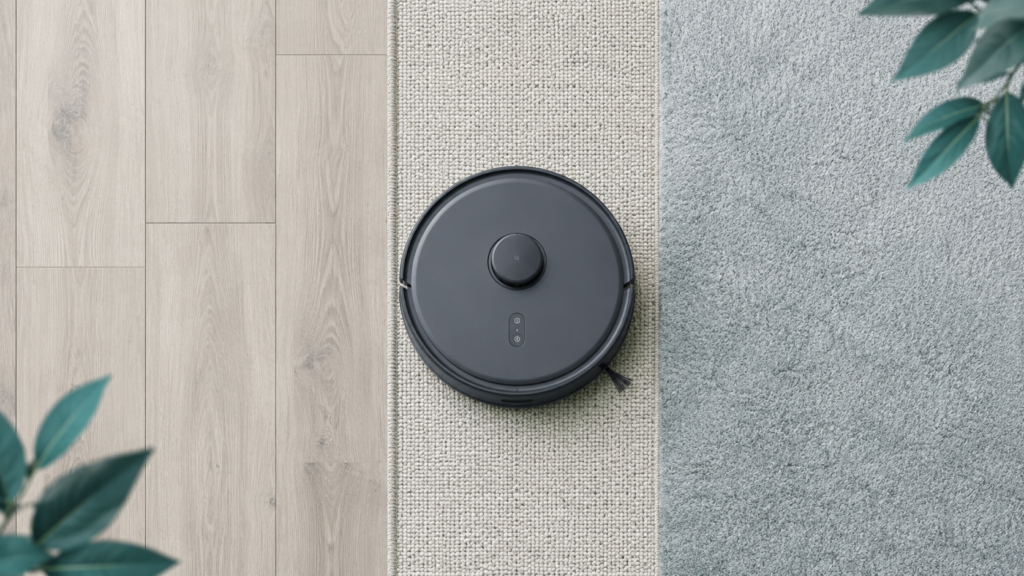
Most homes are not made of a single surface. A typical layout might mix hard flooring in the kitchen, a rug in the living room, and carpet in the bedroom — and a robot vacuum has to handle all of it. Floor type can affect how a robot vacuum moves and picks up debris, which is why two robot vacuums with similar specifications can feel very different depending on which rooms they clean.
This guide explains what generally happens on hard floors, rugs, and carpets, and what beginners should understand before assuming any single feature or number tells the whole story.
Table of Contents
- Why Floor Type Matters for Robot Vacuums
- Hard Floors: What Usually Matters
- Rugs: What Beginners Should Know
- Carpets: Why Results Can Vary
- Floor Transitions, Thresholds, and Mixed Spaces
- How Suction, Brushes, and Airflow Work Together
- Maintenance Across Different Floor Types
- How Beginners Should Compare Floor-Type Claims
- Common Misunderstandings About Robot Vacuums and Floor Types
- Frequently Asked Questions
- Final Takeaway
Why Floor Type Matters for Robot Vacuums
Hard floors, rugs, and carpets can create different cleaning conditions. On a hard floor, debris usually sits on top of the surface, so a robot vacuum mainly needs to sweep and lift it into the dustbin. On a rug or carpet, debris can settle down between fibers, so brush contact and airflow matter more than on a smooth surface.
This also means that suction power, brush design, and the floor underneath a robot vacuum work together, not separately. A robot vacuum that performs well in one room may behave a little differently in another room simply because the floor itself is different.
| Surface | How Debris Sits | What Matters Most |
|---|---|---|
| Hard Floors | Sits on top of the surface | A clean brush and clear airflow path matter most |
| Rugs | Varies by pile; loose rugs can shift or bunch | Low-pile is easier to manage; watch for fringes and tassels |
| Carpets | Debris can settle deeper within the fibers | Brush contact, airflow, and filter condition matter — not suction alone |
Hard Floors: What Usually Matters
Debris Pickup on Smooth Surfaces
On hard floors, debris pickup mostly depends on how well a robot vacuum’s brush and airflow path can sweep dust, crumbs, and small particles into the suction path. Because there is no fiber for debris to sink into, a well-maintained brush and a clear airflow path tend to matter more here than raw suction strength alone.
Surface Sensitivity and Careful Use
Some hard floor materials may be more sensitive to scratching or moisture than others. This guide does not make specific claims about which floor materials are safe under which conditions, since that depends on the flooring material, finish, and manufacturer guidance for both the flooring and the robot vacuum. If a home has a delicate or specialty hard floor, checking both the flooring manufacturer’s care guidance and the robot vacuum’s manual is a reasonable step before regular use.
Rugs: What Beginners Should Know
Low-Pile Rugs and Everyday Use
Low-pile rugs — thin, tightly woven rugs without long fibers — tend to be easier for many robot vacuums to move across than thick or high-pile rugs, since there is less fiber for wheels and brushes to work against. This is a general tendency rather than a guarantee, since results can still vary by model and by how the rug is woven.
Loose Rugs, Tassels, and Fringes
Loose rugs, especially small ones without a non-slip backing, can shift or bunch up as a robot vacuum moves across them. Rugs with fringes or tassels can be a particular issue, since loose threads may wrap around a brush or wheel and cause the robot to stop or get stuck. Tucking fringes underneath the rug, or temporarily securing loose rug edges, is a commonly recommended precaution before running a robot vacuum near rugs like this.
Carpets: Why Results Can Vary
Carpet Pile and Brush Contact
Carpets vary by pile height — generally described as low, medium, or high pile, based on how long the fibers are. Thicker, higher-pile carpets can create more resistance for a robot vacuum’s wheels and brushes, and debris can sit deeper within the fibers, which can make a noticeable difference in how a robot vacuum behaves compared with a hard floor or a low-pile rug.
Why Suction Alone Does Not Explain Carpet Performance
It’s tempting to assume that a higher suction number will always clean carpet better, but suction power may matter, while suction alone does not explain cleaning performance. Brush design, brush condition, airflow path, filter condition, and dustbin fullness all play a role alongside suction. Some robot vacuums include a “carpet boost” type mode that increases suction when carpet is detected, but this behavior varies by model and is not guaranteed to activate the same way in every situation.
For a closer look at what suction power actually measures and why it should be considered alongside other factors, see Robot Vacuum Suction Power Explained.
Floor Transitions, Thresholds, and Mixed Spaces
Most homes have transitions between rooms — door thresholds, raised tile edges, or the boundary where a rug meets a hard floor. A robot vacuum’s ability to move across these transitions depends on its wheel design, motor strength, body clearance, and how accurately its sensors detect the edge.
As a general baseline, many robot vacuums can climb only a modest height at a threshold or rug edge, and this limit varies by model — some newer designs can manage taller transitions than others. Rather than assuming any single number applies to every robot vacuum, it’s more useful to think of threshold height as one of several things to check for a specific model if a home has several raised transitions. Uneven or frayed carpet edges can also be a sticking point, since a robot vacuum may have trouble telling a frayed edge from a flat surface.
How Suction, Brushes, and Airflow Work Together
It helps to think of a robot vacuum’s cleaning ability as a small system rather than a single spec. Brush design and condition affect how well debris is lifted from the floor. Airflow path determines how that debris moves toward the dustbin. Filter condition and dustbin fullness affect how much suction is actually available at the brush. And floor type changes how much resistance and debris depth the system has to work against.
Because of this, higher suction does not automatically mean better cleaning across the board — a robot vacuum with strong suction but a clogged filter or a full dustbin may still struggle, regardless of floor type.
Maintenance Across Different Floor Types
Brushes
Rugs and carpets tend to generate more trapped hair and fiber buildup on a robot vacuum’s brush than hard floors do, simply because there’s more material for hair and debris to wrap around. Checking and cleaning the brush regularly, especially in homes with rugs or carpet, can help maintain consistent pickup. For a step-by-step look at brush cleaning, see How to Clean Robot Vacuum Brushes.
Filters and Airflow
A clogged filter can reduce airflow and weaken effective suction no matter which floor type is being cleaned, but the effect can be more noticeable on carpet, where airflow is already working harder to lift debris out of the fibers.
Dustbin Fullness
A full dustbin can also reduce pickup efficiency. This matters more in carpet-heavy homes, since carpets and rugs tend to generate more debris and trapped hair per cleaning session than hard floors. For guidance on how often to check and replace brushes, filters, and other parts, see How Often Should You Replace Robot Vacuum Parts?.
How Beginners Should Compare Floor-Type Claims
When comparing robot vacuums based on floor-type claims, it helps to treat floor type as one buying consideration among several, rather than the deciding factor. A few practical questions to ask:
- Does the home have mostly hard floors, mostly rugs and carpet, or a mix of both?
- Are there thresholds, raised transitions, or rugs with fringes that could cause friction?
- Does a “carpet boost” or similar feature description explain how and when it activates, or does it just use marketing language?
- Are maintenance needs (brush cleaning, filter checks) described clearly for the floor types in the home?
For a broader look at what to consider before choosing a robot vacuum, see Robot Vacuum Buying Guide for Beginners.
Common Misunderstandings About Robot Vacuums and Floor Types
“Carpet boost always solves carpet cleaning.” Carpet detection or suction boost may help in some cases, but behavior varies by model, and these features are not guaranteed to activate the same way every time.
“Higher suction numbers always mean better cleaning, especially on carpet.” Suction is one part of the system. Brush condition, airflow, filter condition, and dustbin fullness all affect the final result, regardless of floor type.
“Hard floors are always the easy case.” Hard floors are generally simpler for debris pickup, but brush condition, airflow, and surface care still matter — “easy” is a tendency, not a guarantee.
Frequently Asked Questions
Do robot vacuums work on both hard floors and carpets?
Many robot vacuums are designed to handle both, but how well they perform on each surface can depend on the specific model’s brush design, suction behavior, and maintenance condition.
Are rugs harder for robot vacuums than hard floors?
It depends on the rug. Low-pile rugs are often manageable for many robot vacuums, while thick rugs, loose rugs, or rugs with fringes can create more movement or pickup challenges.
Can robot vacuums clean thick carpets?
Many can clean thick or high-pile carpets to some degree, but results can vary by model, and no robot vacuum is guaranteed to deep-clean every carpet the way a dedicated carpet cleaner might.
Does higher suction always help on carpets?
Not by itself. Suction works together with brush design, airflow, filter condition, and dustbin fullness, so a higher suction number alone does not guarantee better carpet results.
What should I check if a robot vacuum gets stuck on a rug?
Common things to check include loose fringes or tassels, a rug that isn’t lying flat, a buildup of hair or fiber on the brush, or a threshold/edge that is taller than the robot vacuum can climb.
Do robot vacuums need different maintenance for different floor types?
Maintenance basics like brush cleaning and filter checks apply across floor types, but homes with more rugs or carpet may need more frequent brush and filter attention due to additional trapped hair and fiber.
Should beginners choose a robot vacuum based only on floor type?
Floor type is a useful factor to consider, but it’s only one part of the overall picture — maintenance needs, app features, and how the robot vacuum fits a home’s layout also matter.
Final Takeaway
Floor type is one of several factors that shape how a robot vacuum performs in a given home — alongside suction, brush condition, airflow, filters, and dustbin maintenance. Rather than assuming one suction number, one mode, or one product type will guarantee good results everywhere, it’s more useful to understand how hard floors, rugs, and carpets each create slightly different conditions, and to factor that understanding into how you compare and maintain a robot vacuum over time.